1771 Manuscript Diary of Governor Charles Pinfold: The Death of Lord Halifax, a Disputed Estate, Georgian Scandal, and the Deliberate Destruction of an Archive
12173On offer is an unpublished manuscript diary kept by Charles Pinfold (1709–1788), former Governor of Barbados, providing an intimate, day-by-day account of the final illness, death, and chaotic, scandal-laced estate settlement of George Montagu-Dunk (1716–1771), 2nd Earl of Halifax. Covering 18 May to 3 October 1771, the diary was written from the epicenter of Halifax’s inner circle of executors, offering an unvarnished, firsthand look at the dismantling of an 18th-century imperial administrator’s life and household.
The Final Days and the Reading of the Will
Pinfold’s entries open on 18 May with a visit to Halifax at the Green House in Bushy Park, where he observes the Earl’s failing health. Subsequent entries track the worsening illness, consultations with physicians including Sir Noah Thomas and Sir Clifton Wintringham, and visits from the family’s circle, notably including Prime Minister Lord North.
Early on 8 June, Pinfold is summoned by a footman sent by Halifax’s mistress, Anna Maria Donaldson’s (c. 1714-1797) footman with news that Halifax had died. Pinfold rushes to the residence and immediately begins navigating the ensuing legal chaos. Three original wills exist, and Donaldson’s copy contains an exclusive codicil. The diary details the tense midday assembly of relations and lawyers at Grosvenor Street to compare the documents, the discovery of a codicil altered just two days prior, and more.
The Mistress and the Disputed Jewels
A central tension within the manuscript is the executors' ongoing confrontation with Anna Maria Donaldson (née Faulkner/Falkner). A former singer, her relationship with Halifax had been the subject of intense contemporary scandal. Pinfold’s diary records the immediate hunt for unaccounted valuables, notably a diamond-set George (the badge of the Order of the Garter) and rich rings. Donaldson initially claims Halifax gave them to her, later altering her story to assert they belonged to her and Halifax's illegitimate daughter, Anna Maria Montagu (1759-1805).
Pinfold captures the cold pragmatism of the estate's administration. On July 3, Donaldson surrenders the jewels to the executors, who subsequently drop embezzlement allegations simply to expedite their Chancery bill, noting: "tho wee cou’d alledge Embezzlements, wee cou’d not prove them." The diary details further disputes over clothing, a post-chaise, and the proceeds of mules Donaldson claims were a gift from Algiers.
Debt, Liquidation, and Archival Destruction
The manuscript reduces Halifax’s well-known financial ruin into stark, daily realities. Pinfold records aggressive creditors, a sudden execution served, and the immediate need to discharge staff, and other efforts to liquidate assets, providing the actual sums for which things were sold. Distrusting Halifax's attorney, the executors consult Solicitor-General Alexander Wedderburn and rush to place the administration under the direction of Chancery. The diary also records a looming threat from the Crown itself, noting Halifax had failed to account for ten years of Treasury funds as steward of Hampton Court Manor.
Perhaps the most striking entries occur in October, when Pinfold travels to the Horton estate in Northamptonshire. Searching through desks, drawers, and the library to assess liabilities, Pinfold methodically destroys substantial quantities of correspondence. He writes starkly: "burnt all the Letters particularly a Draw full on the Election of Northamptonshire." (The 1768 election was a notoriously corrupt contest that cost Halifax a ruinous amount). Pinfold also records destroying documents belonging to another named family member, as well as providing inventories of the Georgian material culture being left behind, such as barrels of collected shells, valuable timber, and a prospective buyer seeking a wooden American Indian figure and a stuffed zebra skin.
Historical Significance and Research Value
For historians and institutional collectors, Pinfold’s diary transcends a simple biographical footnote. Through the executors' clashes with Anna Maria Donaldson, the manuscript offers a highly documented case study in female agency and the precarious property rights of an aristocratic mistress fighting to retain her assets. It is also a critical primary source that documents the deliberate creation of archival silences, providing rare, concrete evidence of how executors sanitized the documentary records of 18th-century statesmen.
Finally, for collectors of Canadiana and Atlantic World history, the diary intimately connects the men who administered Britain’s North American empire. Lord Halifax, for whom Halifax, Nova Scotia, was named, was the "Father of the Colonies." He played a major role in planning and promoting the establishment of the military settlement in 1749 to strengthen British power in Nova Scotia. Before the British established the town and named it after the Earl, the Mi'kmaq people called the deepwater harbor area Chebucto (or Chebookt, meaning "biggest harbour").
The men dismantling his estate were the very machinery of colonial rule: Pinfold was a former Caribbean governor, while his co-executors Edward Sedgwick and Lovell Stanhope were Halifax's trusted under-secretaries. The manuscript places the architects of the British Atlantic World in a private setting, grappling with the localized fallout of an imperial statesman's demise.
Biographical Notes & Dramatis Personæ
The Executors & The Imperial Network
The men profiled below belonged to the Earl of Halifax’s overlapping circles of colonial administration and personal trust. Francis Vernon (Lord Orwell) served on the Board of Trade during Halifax’s tenure as Secretary of State, while Edward Sedgwick and Lovell Stanhope worked directly beneath Halifax as under-secretaries. Charles Pinfold, whose appointment as governor of Barbados had been recommended under Halifax’s presidency, became a trusted friend and executor. The diary brings these connections into intimate focus through Halifax’s final illness and the subsequent administration of his estate.
Charles Pinfold (1709–1788): British civil lawyer, Admiralty advocate, and Governor of Barbados (1756–1766) whose career connected London’s legal establishment with the administration of Britain’s Atlantic empire. The eldest son of Charles and Renea Pinfold, he became an advocate in the Court of Arches in 1736 and an Admiralty advocate in 1751, inheriting Walton Hall, Buckinghamshire, in 1754. In early 1756, the Board of Trade, under the presidency of Lord Halifax, formally recommended him for the governorship of Barbados. His decade in office encompassed the Seven Years’ War and the Stamp Act controversy. Unmarried and without children, Pinfold was a deeply trusted associate of Halifax, who appointed him a trustee, executor, and potential guardian of his daughter.
Francis Vernon, Baron Orwell, later 1st Earl of Shipbrook (c. 1715–1783) was an English politician, militia officer, and Irish peer. He held various government posts, including Clerk to the Privy Council 1738-57 and Lord of Trade 1762-65. He served as a Member of Parliament for Ipswich from 1761 to 1768. He was the eldest surviving son of James Vernon of Westminster and Arethusa Boyle. Vernon's extensive education included time at Trinity College, Cambridge, and Lincoln's Inn. During the Seven Years' War, he was appointed Colonel of the 2nd or East Suffolk Battalion in 1759, personally commanding the regiment at a training camp near Ripley before it was disembodied at the war's close in December 1762. In recognition of his status, he was raised to the Peerage of Ireland as Baron Orwell of Newry in 1762, and was later elevated to Viscount Orwell in 1776, and finally Earl of Shipbrook in 1777. He married Alice Ibbetson in the late 1740s; tragically, all three of their sons (including a son named Francis) died in early childhood. Because he left no surviving heirs, all of Vernon's titles became extinct upon his death on October 15, 1783. Today, the town of Orwell, Vermont, is reputedly named in his honor.
Edward Sedgwick (c. 1722–1781) Edward Sedgwick was a seasoned colonial administrator who served as the under-secretary of American affairs starting in September 1763 under Lord Halifax. Operating at the height of colonial tensions, Sedgwick drafted and managed extensive state correspondence between the Crown and colonial officials in North America, including the Board of Trade. His role placed him in the middle of crucial imperial decisions, including managing colonial border disputes and enforcing government authority in territories like West Florida. He remained a trusted, authoritative voice regarding colonial rights and directives in the Secretary of State's office until his death in 1781.
Lovell Stanhope (1720–1783) was a British lawyer, government administrator, and Member of Parliament for Winchester. Called to the bar at Lincoln’s Inn in 1747, Stanhope was introduced into the secretary of state’s office by his distant cousin, the Earl of Chesterfield. This launched a lengthy bureaucratic career, most notably as a law clerk to the secretaries of state from 1747 to 1774. He concurrently held several significant posts, including private secretary to the Duke of Bedford, agent for Jamaica (1757–1763), and two stints as under-secretary of state under Lord Halifax. In 1774, backed by the political interest of the Duke of Chandos, Stanhope resigned his clerkship to enter the House of Commons for Winchester. Though he never delivered a speech in the House, he remained a steadfast supporter of Lord North’s administration until his death in September 1783.
The Family & Household
George Montagu-Dunk, 2nd Earl of Halifax (1716–1771): A leading figure in British colonial administration, Halifax occupied several of the highest offices of government before his final illness and troubled estate became the central subjects of this diary. Educated at Eton and Trinity College, Cambridge, he succeeded to the earldom in 1739. His marriage to the wealthy heiress Anne Richards in 1741 brought him a substantial fortune and the additional surname Dunk, adopted in connection with her inheritance.
As President of the Board of Trade from 1748 to 1761, Halifax promoted colonial commerce and a more active British role in American affairs. He supported the establishment in 1749 of the Nova Scotian settlement named in his honour. He subsequently served as Lord Lieutenant of Ireland, First Lord of the Admiralty, and Secretary of State for both the Northern and Southern Departments. His ministerial career placed him at the centre of imperial policy during and after the Seven Years’ War, including the reorganisation of Britain’s enlarged North American possessions.
His reputation was also marked by controversy. In 1763 he signed the general warrant that led to the arrest of journalist and politician John Wilkes, provoking a major dispute over governmental power and individual liberty. Wilkes subsequently secured £4,000 in damages against him in 1769. Despite his inherited position and advantageous marriage, Halifax’s finances deteriorated under the burden of building at Horton, household expenditure, and political ambition. The fiercely contested Northampton election of 1768, in which he backed his nephew Sir George Osborn, proved financially ruinous.
Halifax returned to government as Lord Privy Seal in 1770 and became Northern Secretary again shortly before his death on 8 June 1771, aged fifty-four. The diary illuminates the private circumstances behind this public career: his declining health, his reliance on trusted associates such as Charles Pinfold, and the difficulties of administering an estate burdened by debt. Its account of his final illness and the responsibilities left to his executors gives a personal dimension to the financial collapse of a prominent Georgian statesman.
Anna Maria Donaldson, née Faulkner/Falkner (c. 1714–c. 1797): Often referred to as Mary Anne in historical accounts. Donaldson was a celebrated singer and the longstanding mistress of the Earl of Halifax. She was the niece and adopted daughter of George Faulkner (1703–1775), the renowned Dublin printer and publisher of Jonathan Swift. While the exact family tragedy that necessitated her adoption remains lost to history, being raised under the wing of Dublin's most prominent publisher afforded her early cultural exposure and placed her on a trajectory toward the stage.
Possessing a striking physical appearance, she made her theatrical debut on 23 November 1745, singing the role of Eurydice in the pantomime Orpheus and Eurydice at Covent Garden. She quickly established a formidable vocal reputation, becoming a marquee attraction at Marylebone Gardens every summer from 1747 to 1752, where she regularly sang works by composers Thomas Augustine Arne and Willem De Fesch. Her prestige grew as she returned to Covent Garden to perform leading roles, notably playing Polly in John Gay’s The Beggar’s Opera, and even had music specifically inscribed for her by George Frideric Handel. Her career also included a highly publicized autumn 1752 season at the Smock Alley Theatre in Dublin and performances in Bath, before her final London stage appearance on 2 April 1755.
She married William George Donaldson on 19 May 1748 at St George’s, Mayfair. However, it was her celebrated musical prowess that captivated George Montagu-Dunk, 2nd Earl of Halifax. To secure her companionship, Halifax obtained a lucrative government post in Jamaica for her husband, effectively removing William from the picture so Anna Maria could join the Earl's household, initially under the guise of a governess to his legitimate children. Halifax famously built the spectacular Hampton Court House, complete with a rococo garden and shell grotto, specifically for her.
Their relationship was deeply devoted but highly scandalous. In 1760, when a financially ruined Halifax arranged a marriage to a wealthy heiress to save his estate, Anna Maria dramatically intervened. She threw herself at his feet with their infant daughter, Anna Maria Montagu, prompting Halifax to call off the lucrative wedding at the eleventh hour.
As chronicled in the Pinfold diary, her precarious legal position as an aristocratic mistress left her highly vulnerable. The diary serves as a central record of her fierce fight to retain her personal assets and navigate the hostility of Halifax's executors following his death. She later remarried, becoming Anna Maria Lumm, and died in the winter of 1796/1797. In a poignant final testament to her devotion, her will requested that she be buried as close to the Halifax family vault in Northamptonshire as possible.
Anna Maria Montagu (1759-1805): The daughter of George Montagu-Dunk, 2nd Earl of Halifax, and the singer Anna Maria Donaldson, née Falkner, born outside marriage. Appearing in the diary as “Miss Montagu,” she was still a minor when her father died, and her future formed part of the personal responsibilities he entrusted to his executors. In 1772, the physician and anatomist William Hunter issued a certificate rejecting rumours that she was a “hermaphrodite,” condemning them as “malice or wanton cruelty.” Having attended her since infancy, Hunter stated that he had observed no grounds for the allegations. This episode offers a disturbing glimpse of the sexualised gossip directed at a young woman whose parents’ relationship may have made her particularly vulnerable to public scrutiny. It connects her story to the histories of illegitimacy, reputation, and medical authority. On 11 November 1780 she married Richard Archdall, a barrister who subsequently served in both the Irish and United Kingdom parliaments; they had five sons and three daughters.
Frederick North, Lord North (1732–1792): Halifax’s nephew through his mother, Lady Lucy Montagu, and Prime Minister of Great Britain from 1770 to 1782. An accomplished parliamentary speaker and financial administrator, North became Chancellor of the Exchequer in 1767 and retained that office while leading the government. His long premiership became inseparable from the American War of Independence and ended in 1782 following Britain’s defeat at Yorktown. At the time of the diary, however, he was near the beginning of his administration, in which Halifax served first as Lord Privy Seal and then as Northern Secretary. North’s appearance during his uncle’s final illness therefore brings together family concern and the business of government: the dying earl was both a close relative and a serving member of his ministry.
Francis North, 1st Earl of Guilford (1704–1790): A politician and courtier, father of Lord North, and Halifax’s brother-in-law through his first marriage, in 1728, to Halifax’s half-sister Lady Lucy Montagu. Although Lucy died in 1734, the connection between the families endured. Guilford briefly represented Banbury in Parliament before entering the House of Lords in 1729. He served in the household of Frederick, Prince of Wales, and briefly as governor to the future George III; he was created Earl of Guilford in 1752. In the diary he appears as an older family figure consulted at a difficult moment, attending the reading of Halifax’s will and advising the executors about the funeral and their responsibilities. His involvement shows how the settlement of Halifax’s affairs drew upon longstanding family relationships as well as official associates.
John Montagu, Viscount Hinchingbrooke, later 5th Earl of Sandwich (1744–1814): Halifax’s son-in-law and the son of John Montagu, 4th Earl of Sandwich, the prominent naval administrator. In 1766 he married Halifax’s legitimate daughter, Lady Elizabeth Montagu, who died in 1768, leaving two children. He was therefore both Elizabeth’s widower and the father of Halifax’s grandchildren when the diary was written. A Member of Parliament from 1765, he represented Huntingdonshire from 1768 until succeeding his father as Earl of Sandwich in 1792. His assistance in comparing Halifax’s conflicting wills places him directly within the diary’s account of the estate’s uncertain disposition, while his family position gives his involvement particular significance for the interests of the next generation.
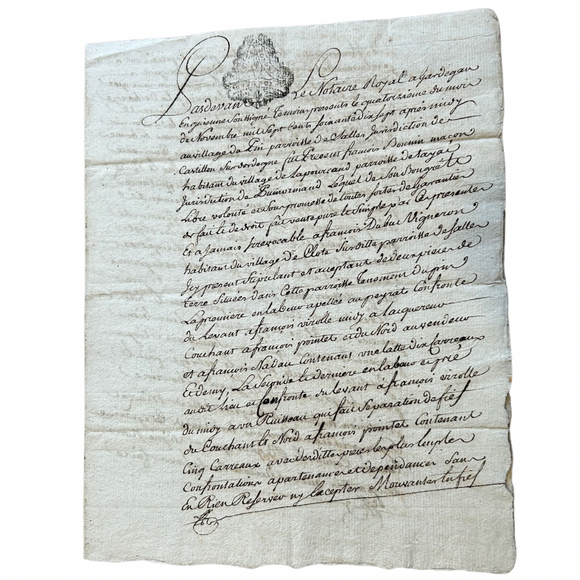
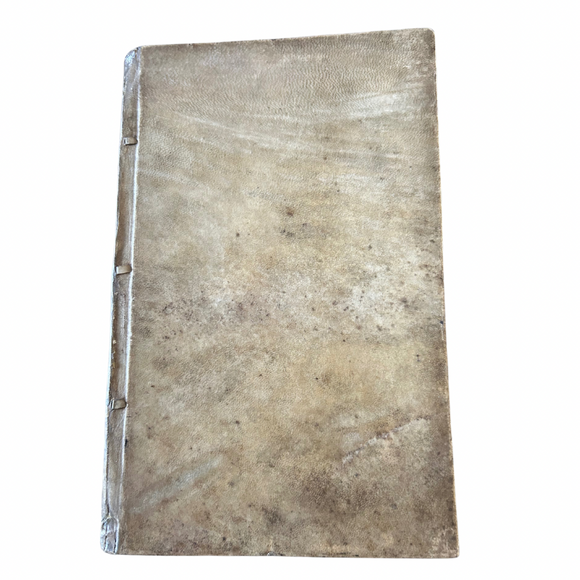
Condition: Remarkably well preserved for its age. Measures approximately 3¾ × 5⅞ inches, with 30 pages of manuscript writing in Charles Pinfold’s hand and additional unfilled pages at the back. Bound in brown leather covers with string stitching visible along the spine. The covers show light surface rubbing, minor scuffs and modest wear at the edges and corners. The paper exhibits gentle age toning, occasional spotting and light handling creases, while the ink remains strong and the handwriting clearly legible. A printed trade label for Robert Thatcher, stationer in Dukes Court near St Martin’s Church, London, survives inside. Overall G+
Authorship:
The diary is firmly attributable to Charles Pinfold through comparison with Halifax’s will (The National Archives, PROB 11/969). The will names four executors: Charles Pinfold, Lovell Stanhope, Edward Sedgwick and Francis Vernon, Lord Orwell. The diarist repeatedly describes administering the estate alongside Stanhope and Sedgwick, and identifies Lord Orwell as the other executor, placing himself in Pinfold’s position. His entry for October 1, 1771, provides a further identifying detail: he travelled to Horton “from Walton,” consistent with Pinfold’s ownership of Walton Hall, Buckinghamshire. Together, these details provide strong internal and documentary evidence of his authorship.
Appendix: Key Figures in the 1771 Halifax Estate Diary
The Key Players: Executors & Administration
The estate's administration was primarily handled by four executors:
-
Charles Pinfold: A civil lawyer and former governor of Barbados. (Internal evidence strongly points to Pinfold as the unnamed narrator/author of the diary).
-
Edward Sedgwick: Halifax’s secretary/under-secretary.
-
Lovell Stanhope: Halifax’s former under-secretary.
-
Lord Orwell (Francis Vernon): A close friend and political protégé of Halifax.
Family & Close Associates
-
Anna Maria Donaldson: Halifax's mistress. She is a central figure in the diary regarding the disposition of jewels and household effects.
-
Anna Montagu: The young daughter of Halifax and Mrs. Donaldson.
-
Mrs. Falkner: A woman present alongside Mrs. Donaldson during Halifax’s final illness.
-
Lady Betty Archer & Lady Frances Burgoyne: Halifax’s surviving sisters.
-
Lord North: The sitting Prime Minister and Halifax’s nephew.
-
Lord Guilford (Francis North): Lord North’s father and widower of Halifax’s half-sister. He advised the executors on the funeral.
-
Sir George Osborn: Halifax’s nephew, present during the final illness and the reading of the will.
-
Lord Hinchingbrooke (John Montagu): Halifax's son-in-law, widower of Halifax's legitimate daughter, Lady Elizabeth Montagu (who died in 1768).
-
Lord Sandwich (John Montagu): Lord Hinchingbrooke's father; a political associate and a debtor to the estate.
-
General James Johnston: Widower of Halifax’s sister, Lady Charlotte.
-
George Montagu: Halifax's cousin and successor to the Salcey rangership.
-
Anne, Countess of Halifax: Halifax's deceased wife, frequently mentioned in relation to her surviving belongings and old correspondence.
Household & Estate Staff
The diary provides a detailed look at the staff who managed the Earl's residences in London and Horton:
-
Mr. Battyn: A trusted household associate who sealed valuables before the Earl's death and handled the will.
-
Mr. Dunn: Halifax's current valet de chambre, who accompanied the coffin.
-
Robert: The former valet de chambre.
-
Mr. Scott: The house steward who executed orders, arranged household matters, and showed contents for the inventory.
-
Barnett: The butler.
-
Mrs. Newland: An observer in the household (likely the housekeeper) who reported on the removal of packages.
-
Mr. Smith: The Horton estate steward, who managed payroll, records, and estate tours.
-
Mrs. Smith: The steward’s wife, who had previously assisted the late Lady Halifax with shell decorations.
-
Oram: The elderly Horton gardener overseeing the kitchen-garden workers.
-
Mr. Archer: A clerk hired by the executors to assist with estate administration.
Medical & Legal Professionals
-
The Physicians: Dr. Noah Thomas (the primary attending physician), alongside consulting physicians Dr. Clifton Wintringham and Dr. Robert James.
-
Mr. Hawkins: The surgeon who conducted the post-mortem examination.
-
Mr. Martyn: Halifax's personal attorney and the steward of the Hampton Court manor courts.
-
Alexander Wedderburn: The Solicitor-General, who provided formal legal opinions to the executors.
-
Estate Lawyers & Proctors: Mr. Pickering (an independent lawyer hired by the executors), Mr. Madox (Chancery counsel), Mr. Sayer (Mrs. Donaldson's lawyer), Mr. Palmer, and Holman (a probate proctor).
Notable Contacts, Creditors & Businesses
-
John Trotter: An undertaker, cabinetmaker, and inventory contractor who managed the furniture storage.
-
Drummonds: The Charing Cross banking firm where the executors deposited the estate's jewels.
-
Sir Robert Throckmorton: A prospective buyer who requested items from Halifax’s collection, including a stuffed zebra skin and a wooden American Indian figure.
-
King George III: Noted in the diary as a Crown creditor potentially owed manor revenue.
-
Mr. Lowndes: A Treasury official who audited potential arrears from Halifax's stewardship of Hampton Court.
References
Primary Manuscripts
Montagu-Dunk, G., 2nd Earl of Halifax. (1771). Will [Registered probate copy, PROB 11/969]. Prerogative Court of Canterbury, The National Archives, Kew.
Pinfold, C. [attributed]. (1771). Diary concerning the final illness, death, and estate administration of George Montagu-Dunk, 2nd Earl of Halifax [Unpublished manuscript]. Katz Fine Manuscripts Inc.
Books, Journals, and Dissertations
Beaumont, A. D. M. (2015). Colonial America and the Earl of Halifax, 1748–1761. Oxford University Press.
Gust, O. (2024). Of mermaids and monsters: Transgender history and the boundaries of the human in eighteenth- and early-nineteenth-century Britain. Gender & History, 36(1), 112–129. https://doi.org/10.1111/1468-0424.12769
Herdeck, M. L. (2022). The origins, evolution, and political consequences of Britain’s new Catholic policy: From the conquest of Quebec to the eve of the American Revolution, 1759–1774 [Doctoral dissertation, Trinity College Dublin].
Archival Collections and Reference Works
Baldwin, O., & Wilson, T. (n.d.). Falkner [Faulkner; married names Donaldson, Lumm], Anna Maria (d. 1796/7), singer. In Oxford Dictionary of National Biography. Oxford University Press.
British Library. (n.d.). Archives and manuscripts catalogue [Collection records for Add MS 38338 and Add MS 34737].
Historic England. (n.d.). Hampton Court House [Research record, UID 616479]. Heritage Gateway.
Stephen, L., & Lee, S. (Eds.). (1885–1900). Dictionary of National Biography [Biographical entries for George Montagu Dunk, Francis North, and Caesar Hawkins]. Smith, Elder, & Co.
Various Archival Authorities. (n.d.). Digital collection records and finding aids. (Consulted repositories include the Library of Congress, National Portrait Gallery, Westminster Abbey, The Royal Society, and Cambridgeshire Archives).
Wikipedia contributors & The Peerage. (n.d.). Biographical entries for 18th-century political and military figures (Including Anna Falkner, George Montagu-Dunk, Lord North, Francis Vernon, John Montagu, and related family histories). Wikimedia Foundation.
Please don't hesitate to contact us for more information or to request photos. (Kindly include the SKU, listed on this page above the price, in your e-mail so we can more easily answer your questions.)